
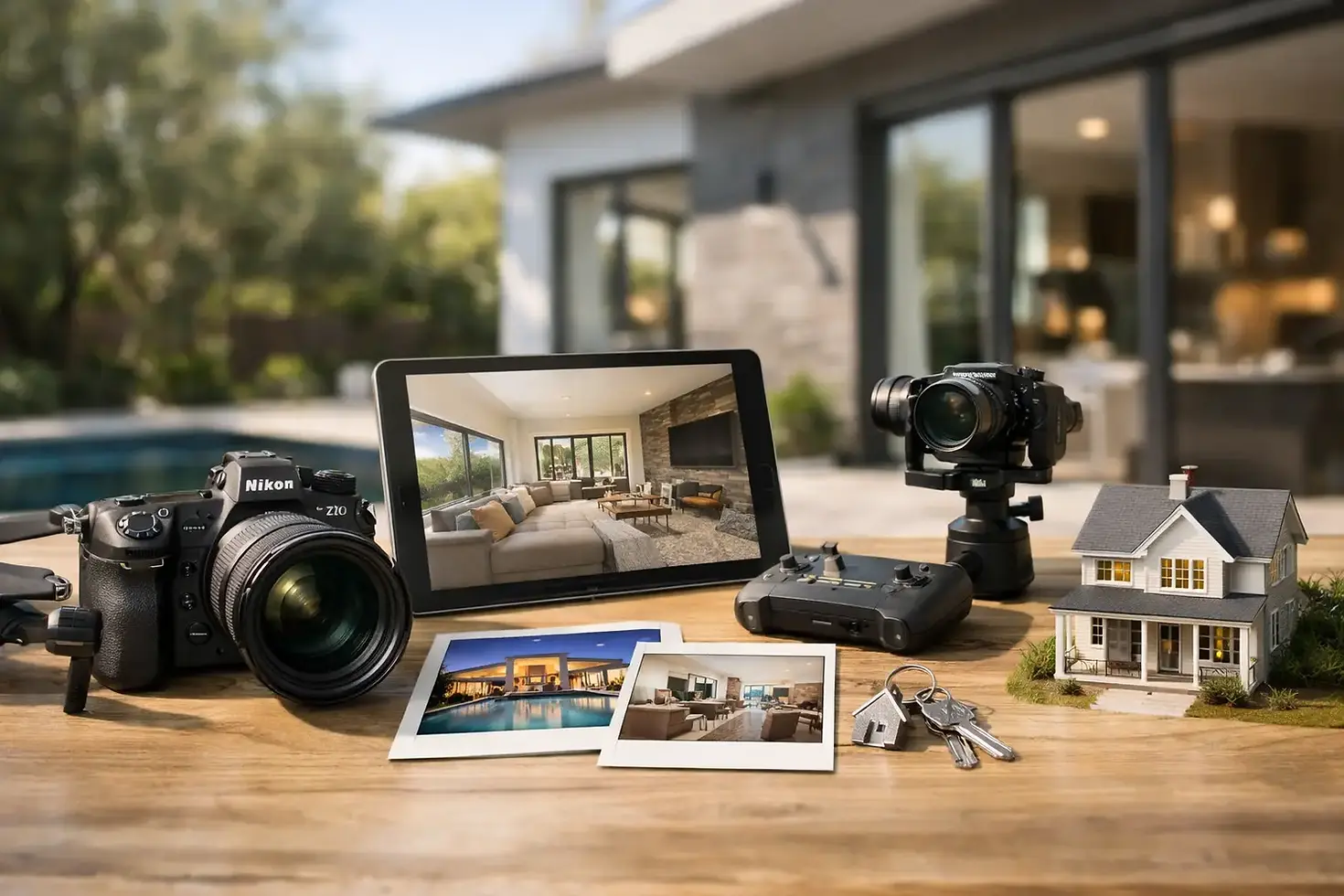
Real Estate Media Package Guide for Listings

A listing goes live, and within seconds buyers are making decisions. Not after the showing. Not after they read every property detail. The first judgment happens in the visuals. That is exactly why a real estate media package guide matters - not as a nice extra, but as a practical tool for winning attention, building trust, and moving properties faster.
For agents, brokers, developers, and property marketers, the real question is not whether to order media. It is which combination of assets will do the job without overspending or slowing down launch. A smart package should match the property, the audience, and the speed of the deal.
What a real estate media package guide should actually help you decide
A useful guide is not just a menu of services. It should help you answer three business questions quickly. First, what assets make this property more marketable? Second, what level of production fits the listing value and strategy? Third, how fast can everything be scheduled, delivered, and published?
That matters because the right package for a $650,000 starter home is not always the right package for a luxury listing, a mixed-use building, or a lease-up campaign. Some properties need clean, efficient coverage. Others need a fuller presentation that gives buyers, tenants, or investors a stronger sense of layout, scale, and finish quality.
A media package should reduce friction. It should make booking simple, limit vendor juggling, and give your team all the core marketing assets in one coordinated shoot.
The core assets that belong in most listing packages
Professional photography is the foundation. It is still the first asset most buyers see, and it carries the entire listing across MLS, portals, email, social, and print. If the photography is weak, every other marketing effort has to work harder.
Floor plans add clarity that still photos cannot provide on their own. Buyers want to understand flow, room relationships, and usable space. In residential listings, floor plans help serious prospects qualify themselves faster. In commercial marketing, they are often essential.
Matterport 3D tours help buyers and decision-makers explore the property with more context before they ever schedule a visit. They are especially valuable when the layout is a selling point, when out-of-area prospects are involved, or when a property needs stronger engagement online.
Aerial drone photography becomes more important when the setting adds value. Large lots, view properties, multifamily buildings, commercial sites, and homes near notable amenities often benefit from an elevated perspective. Drone imagery can either clarify the property or oversell it, so it works best when the surroundings truly support the story.
Virtual staging is a strategic add-on, not a default. It is useful when a vacant space feels smaller, colder, or harder to interpret in raw form. For modern condos, flips, new construction, and empty commercial interiors, it can help prospects picture use and scale. But if the staging style misses the target buyer, it can feel generic fast.
Professional headshots are not property media, but they do belong in a broader agent branding package. If your listing presentation, website, and marketing collateral all point back to you, your own brand image should match the level of the listing.
How to choose the right package for the property
The most effective real estate media package guide starts with property type, not with price alone.
For a standard residential resale, the essentials are usually photography plus a floor plan. That combination covers the basics well and gives buyers both emotional appeal and practical information. If the home has a unique layout, premium finishes, or relocation buyers in the mix, adding a 3D tour usually makes sense.
For luxury residential, expectations rise quickly. Buyers at the high end are not just comparing square footage. They are comparing presentation quality. Photography, floor plans, 3D tour coverage, aerial images, and in some cases virtual staging for select spaces create a stronger package because the listing itself is competing as a branded product.
For commercial properties, function matters as much as aesthetics. Brokers and investors often need clearer documentation of access, circulation, unit mix, context, and site orientation. That usually means combining photography, drone coverage, floor plans, and immersive touring tools. The package has to help people evaluate the asset before they commit to a tour or underwriting time.
For vacant or hard-to-read spaces, visual interpretation becomes the priority. A beautiful photo set is not enough if the audience cannot understand how the property lives or performs. In those cases, floor plans and virtual staging tend to carry more weight.
Budget matters, but so does listing velocity
A common mistake is choosing the cheapest possible package because media feels like a line item to control. That can work on some listings. But when the goal is strong launch momentum, weak visuals usually cost more than they save.
A better way to think about budget is by marketing impact per day on market. If stronger media helps a property stand out in its first week, that early attention can shape showing volume, perceived demand, and buyer urgency. You do not need the biggest package on every listing. You do need a package that gives the property a fair chance to compete.
There is also a time cost to piecing services together from multiple vendors. Separate scheduling, separate revisions, inconsistent quality, and delayed delivery can push back launch. For busy agents and marketing teams, convenience is not fluff. It affects execution.
Speed is part of the package, not a bonus
Fast turnaround is often treated like customer service. In practice, it is a marketing advantage.
Listings lose momentum when media delivery drags. The property is cleaned, prepped, and ready, but the campaign stalls while assets trickle in. That delay matters most in competitive markets where timing drives inquiry volume.
A well-built package should come with a clear workflow: easy booking, straightforward quoting, coordinated capture, and prompt delivery. That is where a full-service provider has a real edge. Instead of booking photography one day, floor plans later, and a 3D tour through someone else, your team can keep the launch moving with one schedule and one point of contact.
For agents working tight timelines in Southern California, that operational efficiency is often as valuable as the images themselves.
What to ask before you book
Not every media package is equal, even when the service list looks similar. Quality comes from execution.
Ask how the provider handles occupied versus vacant properties. Ask what turnaround times are realistic, not just advertised. Ask whether all requested assets can be captured in one visit. Ask how the media is delivered and whether files are organized for easy use across MLS and marketing channels.
Also ask whether the provider understands your property type. Residential and commercial marketing have different priorities. Architectural spaces need a different eye than tract homes. A boutique team with broad category experience can often tailor the shoot more intelligently than a volume-first operation.
This is where a company like Haute Site Media stands out. The value is not just in offering multiple services. It is in combining speed, polish, and reliable execution so agents and property teams can launch with confidence.
Build packages around outcomes, not checkboxes
The strongest media package is not the one with the longest service list. It is the one that helps the listing perform.
Sometimes that means keeping it lean - strong photography, a floor plan, and fast delivery. Sometimes it means building a fuller presentation that supports a premium asking price, remote buyer pool, or more complex property story. The right choice depends on what the market needs to see in order to act.
If you treat media as strategy instead of decoration, package decisions get easier. You stop asking, What can I add? and start asking, What will help this property earn attention, trust, and action right away?
That is the standard worth using on every listing. When your visuals are chosen with that level of intent, the package stops being a cost and starts working like part of the sales plan.


Comments