
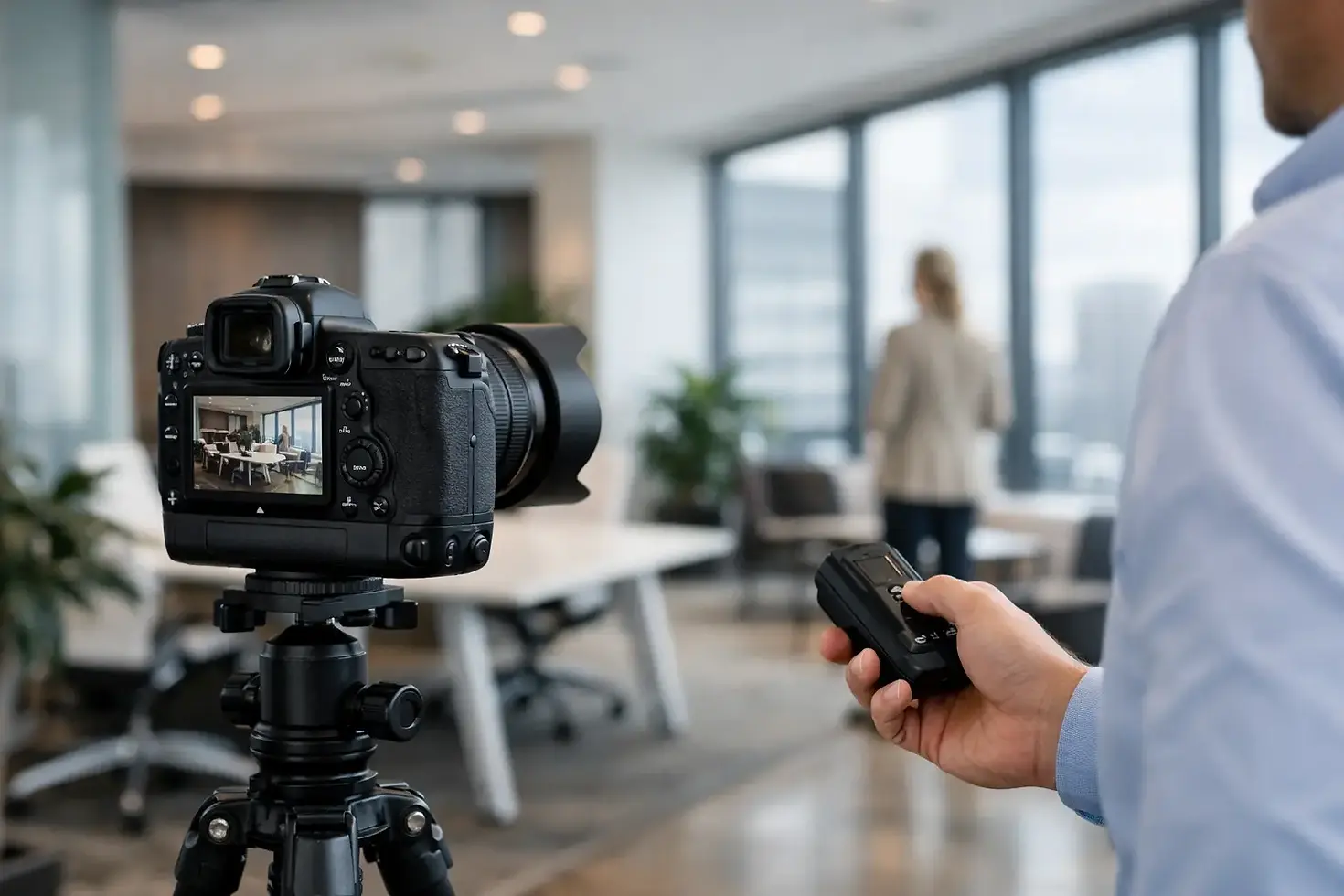
Office Real Estate Photography That Leases

A vacant office suite can look expensive, efficient, or forgettable before anyone reads the flyer. That is why office real estate photography matters so much in commercial marketing. For brokers, owners, and property teams, the images often make the first argument for a tour, a call, or a closer look from a serious tenant.
In office leasing, buyers and tenants are not reacting to charm alone. They are evaluating usability, brand fit, layout logic, natural light, common areas, and how a property supports daily operations. Strong photography does more than make a building look polished. It helps qualified prospects understand the asset quickly, which is exactly what moves marketing from passive exposure to active interest.
What office real estate photography needs to do
Residential photography usually sells lifestyle. Office real estate photography has a different job. It needs to communicate scale, efficiency, finish level, access, and flexibility without making the space feel cold or flat.
That means every image should answer a practical question. Is the lobby modern enough for client-facing businesses? Does the suite feel open or chopped up? Is there enough window line to support an executive tenant? Are the conference rooms usable as shown, or do they feel smaller than the floor plan suggests?
This is where experience matters. Commercial spaces are full of visual traps - mixed lighting, reflective surfaces, long corridors, tinted glass, overhead fixtures, and oversized window exposure. A photographer who understands office assets knows how to manage those conditions so the final gallery feels clean, consistent, and believable.
Why speed matters in commercial marketing
Office listings do not always move on a slow, predictable schedule. A broker may need updated media after a suite refresh, a new anchor tenant departure, a lobby renovation, or a sudden push to improve lead flow. In those moments, delays cost attention.
Fast turnaround is not just a convenience. It affects how quickly a team can launch campaigns, update brochures, refresh listing platforms, and get current assets in front of decision-makers. For competitive leasing environments, especially in active Southern California markets, timing can shape whether your property enters the market looking current or already behind.
Speed only helps if quality holds up. Rushed photography that produces dark interiors, crooked verticals, or inconsistent color creates another problem to fix. The right partner delivers quickly and still produces imagery that feels investment-grade.
The difference between average and effective office photography
A technically acceptable photo is not the same as a leasing asset. Many office listings fail because the gallery documents the property without actually marketing it.
Average images show rooms. Effective images show what makes the property lease-worthy. They establish arrival at the exterior, set the tone in the lobby, clarify circulation in open areas, highlight private office counts where relevant, and present amenities in a way that supports tenant expectations.
Perspective matters too. Overly wide images can make a suite look misleading. Tight compositions can make it feel cramped. Strong office real estate photography balances those extremes. It presents the space accurately while still emphasizing openness, function, and design quality.
There is also a strategic question behind every shot: who is this space for? A creative office environment may benefit from brighter, more energetic compositions. A Class A professional suite may need cleaner, more formal framing. A medical office or flex-office environment calls for a different visual emphasis altogether. The point is not style for style's sake. The point is matching the imagery to the likely tenant and the property's positioning.
What should be photographed in an office property
Not every office asset needs the same shot list, but most marketing packages perform better when they cover the full leasing story.
The exterior should establish location context, access, curb appeal, and signage. The lobby should show condition and professionalism. Individual suites need a mix of wide establishing shots and closer views that show finish details, breakout areas, reception zones, meeting rooms, and key window lines.
Shared amenities often carry more weight than owners expect. Conference facilities, tenant lounges, fitness areas, parking access, and outdoor common spaces can materially affect inquiry quality. If those spaces are part of the value proposition, they should be photographed like assets, not afterthoughts.
For larger buildings, floor plans and 3D tours can add real value because they reduce friction for out-of-area decision-makers and help tenant reps pre-qualify space before scheduling a visit. A one-vendor approach is often more efficient here because the visual package stays consistent across all marketing materials.
Preparing a property for office real estate photography
Preparation affects outcomes more than most teams realize. Commercial properties rarely photograph well when they are treated like live job sites right up to the appointment.
The first step is deciding what story the space needs to tell. If a suite is shell condition, the photography should focus on volume, light, and infrastructure. If it is move-in ready, the goal shifts toward polish and functionality. If it is partially occupied, the team has to decide whether the existing furniture supports the target image or distracts from it.
Cleanliness is non-negotiable. Smudged glass, tangled cords, trash bins, patchwork repairs, and outdated signage all register immediately in professional images. So do missing ceiling tiles, burned-out bulbs, and uneven blinds. These issues feel small on-site and large in photos.
Timing also matters. Office buildings often look best when natural light supports interiors without blowing out windows or creating harsh contrast in common areas. Depending on orientation and glazing, that ideal window may be brief. A photographer with commercial experience plans for it rather than guessing on site.
When staging helps and when it does not
Staging can absolutely improve office marketing, but it depends on the asset. For spec suites, executive offices, and smaller professional spaces, light staging can help prospects read the layout faster. Reception areas, conference rooms, and open work zones often benefit the most.
For larger offices, staging every area may not be the best use of budget. In some cases, a cleaner strategy is to selectively stage high-impact areas and let strong photography handle the rest. The right decision depends on suite size, target tenant, leasing timeline, and whether the property competes on design, efficiency, or price.
Virtual staging can help in some scenarios, especially when a vacant space feels hard to interpret. But it needs to be realistic and used carefully. If it overpromises or misrepresents dimensions, it can create friction later in the leasing process.
How photography supports broker credibility
Tenants judge properties, but they also judge the team presenting them. If your media package looks dated, inconsistent, or incomplete, that reflects on the broker and ownership group as much as the building.
High-quality office photography signals preparation. It tells prospects that the listing is active, current, and professionally managed. It gives brokers cleaner presentation decks, sharper email campaigns, and stronger first impressions in online searches where attention is limited and competition is close.
This is especially true for investment sales and owner-user opportunities, where decision-makers may review multiple assets quickly. Better imagery helps a property hold attention long enough for the rest of the marketing to do its job.
Choosing the right photography partner
Commercial clients usually do not need a photographer. They need a dependable media partner who understands property marketing timelines, access logistics, and the standards expected by brokers, asset managers, and developers.
That means communication should be fast, quoting should be clear, and scheduling should not become a project of its own. It also means the provider should be comfortable working across different property types, from boutique offices to larger multi-tenant buildings.
For many teams, the real advantage is consolidation. When photography, floor plans, aerial imaging, 3D tours, and other listing assets come from one experienced source, coordination gets easier and the final presentation feels more unified. That is one reason firms like Haute Site Media are often brought in not just for a shoot, but for the full commercial marketing package.
Office real estate photography is a leasing tool
The best commercial images do not just make a property look good for a moment. They help the market understand the asset faster, reduce uncertainty, and support better conversations with better prospects.
If your office listing is about to launch, relaunch, or compete harder, the question is not whether photography matters. It is whether your current images are helping the property lease the way it should. Strong visuals give your marketing team something useful to work with, and that usually shows up where it counts - attention, tours, and momentum.


Comments