

Beverly Hills Luxury Real Estate Photography

Beverly Hills luxury real estate photography has one job before a buyer ever requests a showing: make the property feel worthy of their attention. At this level, buyers are not simply comparing bedroom counts or square footage. They are reading the quality of the listing, the restraint of the presentation, the way daylight sits across limestone, and whether every image supports the price point.
A luxury listing can have a remarkable address and exceptional finishes, yet still lose momentum when the media feels rushed, dark, distorted, or generic. Strong photography does more than document rooms. It establishes confidence, attracts the right audience, and gives an agent a polished asset package for the MLS, broker outreach, print, social media, and private client presentations.
What Beverly Hills Buyers See Before They See the Home
The first viewing often happens on a phone, and that reality changes the standard for every listing image. A prospective buyer may spend only seconds deciding whether a property deserves a closer look. The opening image needs to be immediate and credible, while the complete gallery must reward a buyer who takes time to examine the home.
For Beverly Hills properties, that means photography should communicate more than scale. It should reveal proportion, privacy, material quality, architectural intent, and the lifestyle attached to the residence. A formal living room is not just a large room. It may be the setting for entertaining, art, or a carefully considered collection of furnishings. A primary suite is not merely a bedroom. It is a private retreat whose light, view, circulation, and finishes need to come through clearly.
The goal is not to make a property look different from reality. It is to present its best and most accurate version. Sophisticated buyers notice when wide-angle distortion makes a room feel implausibly large, when skies look artificial, or when editing removes the texture that makes a home distinctive. Premium presentation depends on polish, but it also depends on trust.
The Details That Define Luxury Real Estate Photography
Luxury photography begins before the camera is set up. The strongest results come from a deliberate plan that accounts for the property, the architecture, the listing strategy, and the time of day. An agent who shares the home's priority features in advance helps the photographer focus on what supports the sale: a restored original detail, a new kitchen by a notable designer, a rear garden with rare privacy, or a view that changes the value proposition.
Light should feel intentional
Natural light is often the starting point, especially in spaces with large windows, patios, and layered indoor-outdoor living. But daylight alone is not a strategy. The photographer must balance bright exterior views with the interior, control harsh sun, and preserve the warmth of a room without turning the color muddy.
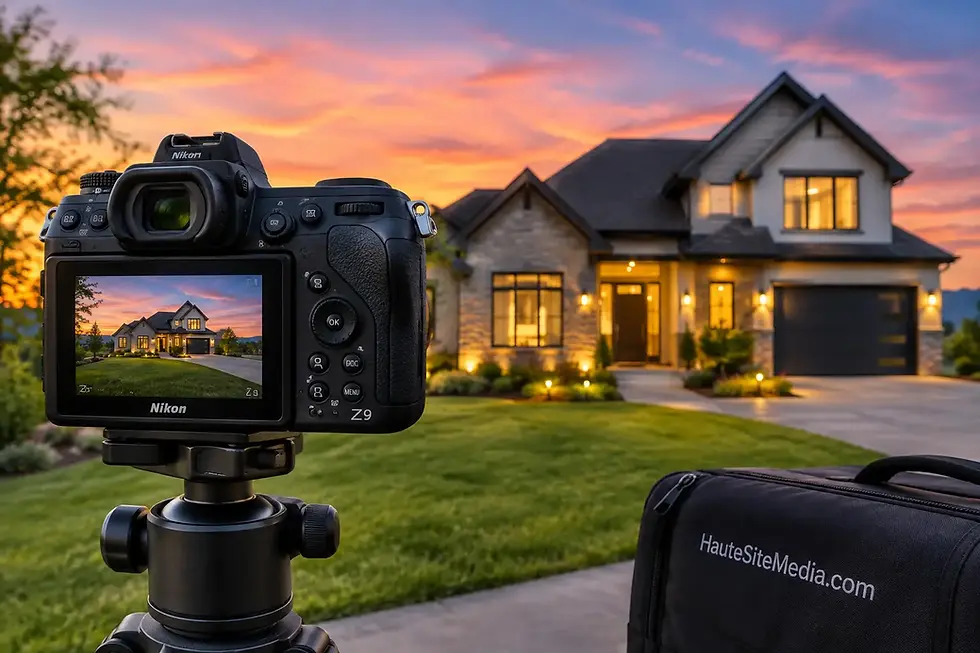
Timing matters. A west-facing terrace may be at its best later in the day, while a courtyard can photograph more elegantly when direct overhead sunlight has softened. Evening exterior images can add drama for the right home, particularly when landscape lighting, pools, and architectural lines are part of the appeal. It depends on the property. A bright contemporary residence and a traditional estate do not need the same visual treatment.
Composition should create clarity, not spectacle
Every frame should answer a buyer's silent questions: How does this room connect to the next? Where is the focal point? Is there usable space beyond the furniture? What does the home feel like when you are standing there?
Clean composition gives rooms room to breathe. It avoids awkward tangents, excessive ceiling, cluttered counters, and angles that confuse the floor plan. It also knows when to feature a detail. A hand-finished fireplace surround, custom millwork, a sculptural staircase, and a perfectly framed view can each earn a close image when they reinforce the home's identity.
Editing needs restraint
Editing is where consistency is won or lost. Windows should retain believable exterior detail. White walls should look clean without losing their natural tone. Wood, stone, metal, and textiles should read accurately. The finished collection should feel cohesive from the first image to the last.
Overprocessing can make a home look less expensive, not more. Heavy saturation, artificial sharpness, and overly dramatic skies may draw attention to the image rather than the property. The best editing feels effortless because it protects the details buyers expect to inspect.
A Complete Marketing Package Creates More Opportunities
Still photography is the foundation, but complex listings often benefit from supporting visual assets that reduce friction for remote buyers, investor groups, and busy decision-makers. A Matterport 3D tour can help prospects understand room flow before scheduling a private appointment. Floor plans add useful context around layout and scale. Aerial drone photography can establish lot size, surrounding greenery, proximity to landmarks, and the relationship between the residence and its setting.
Virtual staging can also be a practical choice when a home is vacant or when an awkward room needs a clearer purpose. The trade-off is simple: staging should support the architecture, not distract from it. Furniture selections must match the level of the listing, remain proportionate to the space, and be disclosed appropriately where required.
Using one experienced media partner for photography, aerial imagery, 3D tours, floor plans, 360 tours, and virtual staging helps keep the visual direction consistent. It also simplifies scheduling and asset delivery when an agent is preparing a listing under a tight deadline.
Preparing the Property for a High-End Shoot
A premium shoot is most efficient when the property is fully ready before the scheduled arrival. This is not about making a home look sterile. It is about removing distractions so the buyer can focus on design, space, and value.
Counters should be clear except for intentional styling, personal photographs should be stored away, cords and remotes should disappear, and window treatments should be adjusted for the selected views. Exterior areas need the same attention. Sweep walkways, arrange outdoor furnishings, remove pool equipment, and confirm that landscaping is camera-ready. If a property has a gate, guard access, elevator reservation, or building restrictions, those logistics should be handled ahead of time.
For occupied homes, agents should set expectations with sellers early. A well-prepared property photographs faster and produces a stronger gallery. That preparation protects the seller's privacy, reduces reshoot risk, and keeps the listing timeline moving.
Speed Matters, But It Cannot Replace Judgment
Real estate moves quickly, particularly when an agent is coordinating contractors, staging, disclosures, and a launch date. Fast turnaround is valuable because it gives the listing team time to review assets, build marketing materials, and go live while interest is high. For many projects, delivery within 3 to 12 hours can be a meaningful operational advantage.
Still, speed is only useful when the visual standard holds. A rushed gallery with inconsistent color or missing key spaces creates more work for the agent and weakens the debut. The right partner combines responsive scheduling with an established process for capture, editing, quality control, and delivery.
Haute Site Media approaches the assignment as a marketing project, not a quick stop with a camera. That distinction matters when a property needs a coordinated asset package and a dependable team that understands listing pressure.
Choosing a Photographer for a Beverly Hills Listing
When evaluating a provider, look beyond a single attractive image. Ask whether their portfolio shows control across different property styles, from modern glass homes to traditional estates and refined condominium residences. Look for accurate vertical lines, balanced interiors, natural window exposures, and thoughtful exterior work.
Also consider the practical side. Can the team accommodate access requirements? Do they offer the additional services your listing needs? Is their turnaround clear? Will the final assets be organized in a way that makes them easy to use across your marketing channels?
The lowest price can be tempting, especially when expenses are stacking up before launch. But luxury media is not a place to treat presentation as an afterthought. The cost of weak first impressions can be far greater than the difference between a basic shoot and a carefully executed one.
A Beverly Hills property enters the market with a story already attached to its location, architecture, and asking price. Give buyers images that make that story believable, then make it easy for them to take the next step.


Comments