

8 Types of Real Estate Photography

A listing can have the right price, a smart strategy, and solid demand behind it - and still underperform if the visuals miss the mark. That is why understanding the different types of real estate photography matters. The right media package does more than make a property look polished. It helps buyers, tenants, and investors understand space faster, qualify themselves sooner, and take the next step with more confidence.
For agents, brokers, developers, and property marketers, the question is rarely whether professional visuals are worth it. The real question is which formats make sense for this property, this audience, and this timeline. Not every listing needs every asset. But every listing does need the right ones.
Why the types of real estate photography matter
Real estate marketing is not one-size-fits-all. A starter condo, a luxury estate, a retail center, and a multifamily development all need different visual priorities. Residential buyers may respond most strongly to bright interiors and lifestyle cues. Commercial prospects often need clarity, scale, access, and layout context. Developers may need polished assets that support pre-leasing, investor presentations, or brand positioning.
That is where choosing among the main types of real estate photography becomes a strategic decision, not just a creative one. When you match the format to the property and the audience, you reduce friction. People spend less time guessing and more time engaging.
Standard interior and exterior photography
This is the foundation of most listing packages, and for good reason. High-resolution interior and exterior photography gives a property its first impression across the MLS, listing portals, brochures, and email campaigns. It captures the core selling points - natural light, finishes, room flow, curb appeal, landscaping, and architectural character.
For most residential listings, this is the minimum starting point. For commercial spaces, it is still essential, but the emphasis may shift. Clean coverage of entrances, common areas, suites, parking, and building features becomes just as important as visual style.
The trade-off is simple. Standard listing photos are necessary, but by themselves they may not fully explain layout, scale, or lot position. They perform best when the property is straightforward and the goal is broad market visibility with quick turnaround.
Best use cases
This format works well for nearly every property type, especially resale homes, condos, apartments, office suites, and smaller commercial listings. If speed matters, this is usually the fastest way to get polished marketing live.
Aerial drone photography
Some properties need context as much as they need beauty. Aerial drone photography shows location, lot lines, surrounding streets, views, proximity to amenities, and the relationship between structures and land. For larger homes, corner lots, commercial sites, industrial properties, and development parcels, this can change how quickly a prospect understands value.
Drone images are especially effective when ground-level photography cannot fully communicate scale. A gated estate may look attractive from the driveway, but the full impact often appears only from above. The same goes for shopping centers, business parks, churches, schools, and mixed-use projects.
That said, drone coverage is not always necessary. If a property has no meaningful exterior footprint or the surrounding area adds little to the story, aerials may be optional. Weather, airspace restrictions, and timing can also affect scheduling. Still, when location and land are part of the sale, drone photography is often one of the highest-return add-ons.
Twilight photography
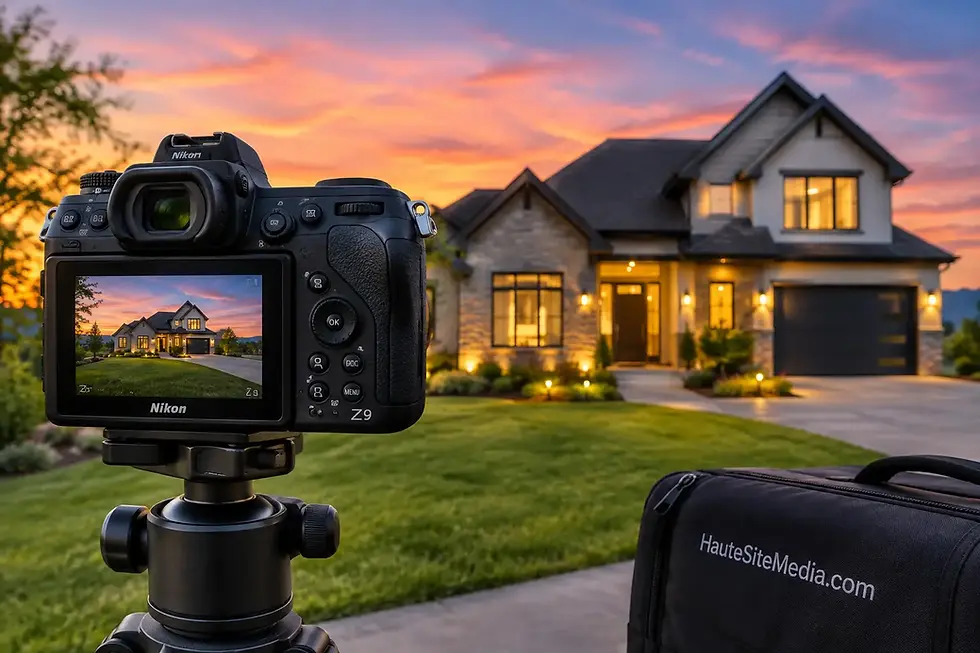
Twilight photography is less about documentation and more about emotional pull. Exterior images captured at dusk can make a home feel elevated, warm, and highly marketable. Pool lighting, landscape lighting, skyline views, and glass-heavy architecture all tend to perform well in this format.
This style is often used for luxury residential listings, hospitality properties, and architecturally distinctive homes. It creates a premium look that stands out in crowded feeds and marketing materials. When a property has outdoor living areas, dramatic windows, or strong evening ambiance, twilight can make a major difference in perceived value.
The catch is that twilight is a narrower tool than daytime photography. It usually complements a standard shoot rather than replacing it. If the home’s strongest features are interior layout or daylight views, twilight should be treated as a selective enhancement, not the entire strategy.
Matterport 3D tours
Matterport 3D tours help prospects move through a property on their own schedule. Instead of relying only on still images, buyers and tenants can navigate room to room, understand flow, and get a stronger sense of proportion before booking a showing.
This is one of the most practical types of real estate photography for busy agents because it helps filter inquiry quality. People who reach out after viewing a 3D tour often have a clearer understanding of the space. That can reduce unnecessary appointments and improve showing efficiency.
For out-of-area buyers, relocation clients, and commercial decision-makers coordinating across teams, 3D tours are especially useful. They also support properties with unusual layouts that still photos may not explain well. The limitation is that not every listing needs this level of interactivity. For lower-priced inventory moving quickly, standard photos may be enough. But for complex spaces and remote audiences, Matterport adds real value.
Floor plans
Floor plans answer a question photography alone cannot fully solve: how does the space actually fit together? Room dimensions, circulation, and overall layout matter to serious buyers and tenants, especially once they move beyond casual browsing.
This is why floor plans have become a strong companion asset for both residential and commercial marketing. In homes, they help buyers understand bedroom separation, kitchen adjacency, and usable square footage. In office, retail, and multifamily properties, they help prospects evaluate operational fit.
Floor plans are not glamorous, but they are practical. They reduce confusion and support faster decision-making. If you are marketing to analytical buyers, investors, or commercial users, they often punch above their weight.
Virtual staging
Vacant spaces can feel smaller, colder, and harder to read. Virtual staging solves that by adding believable furnishings and design cues to selected photos. It helps prospects imagine scale, use, and lifestyle without the cost and logistics of physical staging.
This is especially helpful for new construction, vacant resales, rental units, and commercial interiors that need visual direction. A blank living room may not tell a buyer much. A thoughtfully staged image can immediately show seating layout, focal points, and room function.
There is an obvious balance to maintain here. Virtual staging needs to be tasteful, accurate, and clearly aligned with the actual dimensions of the property. If it feels exaggerated or misleading, it can create disappointment later. Used well, though, it is one of the most efficient ways to increase appeal without slowing down your launch timeline.
360 tours
360 tours offer another interactive way to explore a property, especially for audiences who want a quick sense of place without a full 3D model. They can be useful for hospitality, commercial spaces, amenities, and certain residential applications where panoramic viewing adds context.
Compared with Matterport, 360 tours may feel lighter and simpler. That can be an advantage when turnaround and ease of use matter most. On the other hand, they typically provide less structural detail than a true 3D walkthrough. Which one is better depends on the listing, the audience, and how much spatial clarity the property requires.
Architectural and detail photography
Some properties are sold on craftsmanship, design intent, and material quality. Architectural and detail photography focuses on those elements with more precision than a standard listing shoot. Instead of simply covering rooms, it highlights lines, textures, built-ins, custom finishes, and the way light interacts with the space.
This format is particularly valuable for luxury homes, architect-designed residences, hospitality properties, model units, and projects being marketed to design-aware buyers or investors. It can also support builders, architects, and developers who need portfolio-quality imagery beyond a single listing cycle.
The difference here is purpose. Standard listing photography is built for speed and broad presentation. Architectural photography is more selective and more refined. If the property’s competitive edge is design, this approach can be worth the extra attention.
Choosing the right mix for your listing
The strongest marketing packages are rarely built around a single asset. They are built around the property’s actual selling points. A compact condo may need clean interiors, exteriors, and a floor plan. A luxury estate may benefit from standard photos, twilight, aerials, and a 3D tour. A commercial site may need ground photography, drone coverage, floor plans, and 360 views to answer practical leasing questions upfront.
Speed also matters. In fast-moving markets like Los Angeles and surrounding Southern California areas, delayed visuals can mean delayed traction. That is one reason many professionals prefer working with one media partner that can coordinate photography, 3D tours, aerials, floor plans, and staging without adding scheduling friction.
At Haute Site Media, that full-service approach is built around the way agents and property teams actually work - fast launches, polished presentation, and dependable turnaround.
When you are deciding among the types of real estate photography, think less about checking boxes and more about what your audience needs to say yes faster. The best visuals do not just make a property look good. They make the next decision easier.


Comments